Pain is personal, but it is also a major global health concern. The World Health Organization reports that low back pain affected about 619 million people worldwide in 2020. That number may reach 843 million by 2050. These figures explain the growing interest in practical, low-risk tools such as athletic and kinesiology taping.
So, why does taping help with pain relief? The answer is not completely settled. Tape gently lifts or tensions the skin, creating a noticeable sensory signal. That signal may influence how the nervous system interprets movement and discomfort. It can also improve body awareness during walking, lifting, or rehabilitation exercises. Some patients report immediate relief after application. Others notice little change. Both experiences matter.
Pain researcher Professor Lorimer Moseley explains, “Pain is an output of the brain, not an input from the tissues.” This principle helps explain why tape may change pain without repairing damaged tissue. It may provide confidence, movement guidance, and short-term comfort. It is not a cure.
Clinical evidence remains mixed. Systematic reviews generally find modest, short-term benefits for selected musculoskeletal conditions, while evidence quality varies. The tape’s color is not the treatment. Application technique, skin condition, diagnosis, and patient response matter more.
A qualified physiotherapist should assess persistent pain before recommending taping. Used thoughtfully, tape can complement exercise and education. It should not replace them. The honest answer is less dramatic, but more useful: taping may help some people, sometimes, for specific reasons.
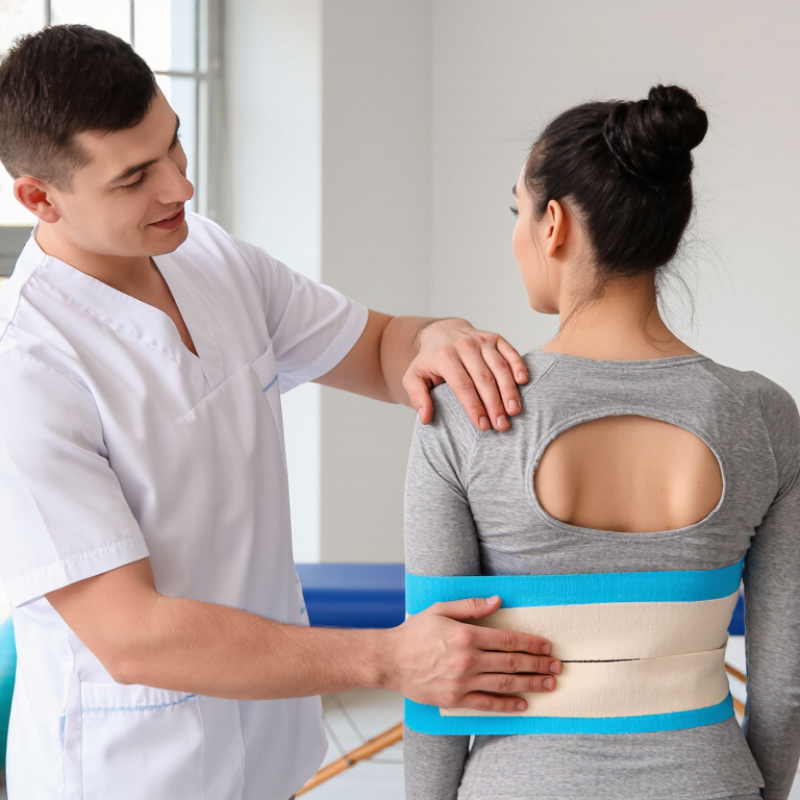
Taping is the application of adhesive strips to the skin to influence movement, pressure, and sensory feedback. It may be elastic or relatively rigid. The material, direction, tension, and placement all affect the result. Taping does not repair damaged tissue. It may change how a painful area feels during movement.
The basic principle is simple: gentle skin stimulation can provide extra information to the nervous system. This input may reduce pain sensitivity or improve awareness of joint position. A tape application can also remind someone to avoid a stressful movement. In some cases, it offers light support without fully restricting motion. That balance matters.
Good taping begins with an assessment, not a random pattern. A trained clinician considers the pain source, skin condition, movement habits, and treatment goals. Clean, dry skin helps the tape stay in place. Excessive tension can cause itching, blisters, or numbness. Remove it if the skin becomes painful, pale, or unusually warm. Avoid applying tape over open wounds, active rashes, or unexplained swelling.
Research suggests that taping may provide short-term relief for some conditions, but results vary. It should support exercise, education, and gradual movement rather than replace them. The method is useful, but it is not magic. Its effects can be subtle, temporary, and difficult to measure. That uncertainty deserves honest attention.
What Is Taping and Why Does It Help With Pain Relief?
Tape is a support tool, not a cure. Its effects may come from gentle pressure, movement reminders, or improved confidence. The World Health Organization reports that lower-back pain affected 619 million people globally in 2020. The number could reach 843 million by 2050. That scale explains the interest in simple, low-risk options.
Rigid athletic tape limits unwanted joint movement. It is commonly used for ankle support, wrist protection, and short-term sports injuries. Elastic kinesiology tape stretches with the skin. Therapists may apply it around the shoulder, knee, or lower back to guide movement and reduce discomfort. Cohesive wrap sticks to itself, not directly to the skin. It can secure dressings or provide light compression around swollen areas. A 2021 systematic review in the Journal of Physiotherapy found that taping may offer short-term pain relief in some musculoskeletal conditions, but the evidence quality was inconsistent. That matters. Feeling better does not always prove that tissue healing has improved.
Tips: Clean and dry the skin first. Apply moderate tension. Never wrap tightly around numb, cold, or discolored fingers. Remove the tape if itching, burning, or blistering appears. Avoid broken skin. A physiotherapist can match tape type and placement to the movement problem. The honest limitation is clear: tape can support rehabilitation, but it should not replace assessment, exercise, or medical care.
Taping is the application of adhesive or cohesive material to the skin or around a joint. It may help reduce discomfort by providing support, limiting irritating movement, applying light compression, and increasing sensory feedback about body position. Its effects vary by injury, tape type, and application technique.
Typical wear time by tape type is shown for general guidance only. Actual wear time depends on skin sensitivity, activity, moisture, circulation, and clinical advice. Taping should not be applied over broken skin or used to replace diagnosis and rehabilitation.
Taping uses flexible or firm strips on the skin to influence movement, comfort, and joint awareness. A therapist may place tape around a sore knee, shoulder, or ankle. The gentle pressure can make movement feel more controlled. It may also reduce fear when reaching, walking, or climbing stairs.
Pain relief is rarely caused by one mechanism. Tape may stimulate skin receptors and change how the nervous system interprets painful signals. It can provide a light reminder to avoid a strained position. Some people notice easier movement within minutes, while others feel no meaningful change. The response is personal. Not a perfect fix.
Good taping depends on assessment, not guesswork. A qualified clinician should consider swelling, skin sensitivity, circulation, injury history, and the activity causing pain. Tape should feel supportive, never tight, numb, itchy, or sharp. Remove it if the skin becomes red, blistered, or unusually warm. Clean, dry skin improves comfort and adhesion.
Taping works best beside appropriate exercise and gradual activity. For example, a person with mild knee discomfort might use tape while practicing controlled step-downs. The tape may improve confidence, but strength and coordination still need training. Research shows mixed results, so promises of guaranteed pain relief are unreliable. Even experienced practitioners must reassess placement when symptoms, posture, or movement patterns change.
Taping uses elastic or rigid strips to support movement and reduce uncomfortable skin or joint sensations. It does not repair tissue or replace rehabilitation.
A 2015 Cochrane Review found limited, low-quality evidence for kinesiology taping in chronic low-back pain. Later clinical reviews reported possible short-term relief, but results remain inconsistent. That matters. Tape should support a plan, not become the plan.
Step-by-step,
wash and dry the skin, then check for cuts, rash, swelling, or numbness. Test a small piece for several hours. Measure the strip with the joint in a relaxed position, and round the corners to reduce peeling. Place the first two centimetres without stretch. Apply gentle tension only if a qualified clinician recommends it; excessive pulling can irritate skin or restrict circulation. Rub the tape lightly to activate adhesion. Keep joints moving normally, without forcing painful ranges. Remove it slowly after bathing, or sooner if burning, itching, tingling, pale skin, or increased pain appears.
Tips:
Never cover an open wound, infected skin, or an area with reduced sensation. Avoid applying tape immediately after shaving. Use clean scissors and wash your hands first. In practice, placement often needs adjustment; one setup may feel helpful, while another may worsen symptoms. People with fragile skin, circulation problems, allergies, or unexplained pain should seek professional advice before taping. Stop if symptoms spread or new weakness develops.
What Is Taping and Why Does It Help With Pain Relief?
Taping may reduce pain by giving a joint light support and changing movement awareness. Some people feel steadier within minutes. Others notice little difference. Its effects vary with the injury, tape placement, and skin sensitivity. Taping does not repair a torn ligament, heal a fracture, or replace a clinical assessment. Evidence is also mixed, so a temporary improvement should not be mistaken for recovery.
Safety matters. Apply tape only to clean, dry, unbroken skin. Remove it if you notice itching, burning, rash, increased pain, numbness, or unusual swelling. Do not wrap tightly around an injured limb, because restricted circulation can worsen symptoms. People with fragile skin, circulation problems, reduced sensation, or adhesive allergies should ask a qualified healthcare professional first. An imperfect application may still feel helpful, but that does not make it safe or suitable.
Tips: Test a small area first. Keep the tape loose enough to move comfortably. Check your skin after thirty minutes and again before sleep. Seek care for severe or worsening pain, major swelling, visible deformity, fever, new weakness, numbness, or trouble bearing weight. Prompt evaluation is especially important after a fall, collision, or sudden twisting injury. Don’t let tape delay medical care.
Taping uses adhesive strips to influence movement, pressure, and sensory feedback. It may provide light support and temporary comfort.
Gentle skin stimulation may change pain sensitivity or improve joint-position awareness. It can also remind you to avoid stressful movements. Sometimes, the effect is subtle.
Rigid tape can limit unwanted joint movement. Elastic tape stretches with the skin. Cohesive wrap sticks to itself and offers light compression.
No. Taping does not repair torn ligaments, heal fractures, or restore damaged tissue. Feeling better does not always mean healing occurred.
Apply it to clean, dry, unbroken skin. Use moderate tension. Leave enough room for comfortable movement and normal circulation.
Remove it if itching, burning, rash, numbness, unusual warmth, or swelling appears. Check the skin after thirty minutes and before sleep.
People with fragile skin, circulation problems, reduced sensation, or adhesive allergies should ask a qualified healthcare professional first.
Seek care for severe pain, worsening symptoms, major swelling, deformity, fever, new weakness, numbness, or difficulty bearing weight. Do not delay care after a fall or collision.
No. Results vary with the injury, placement, skin sensitivity, and movement habits. The evidence is mixed, so confidence should stay modest.
No. It should support assessment, education, and gradual movement. Relying on tape alone may hide a problem, and that deserves reflection.
Taping is a supportive technique that uses adhesive strips placed on the skin to gently influence movement, provide light support, and increase awareness of a painful or unstable area. Different tapes may serve different purposes: elastic tape allows flexibility and may assist muscle movement, while firmer tape can help limit excessive motion and protect a joint during activity. Understanding why does taping help with pain relief involves recognizing that tape may reduce strain, improve body awareness, encourage better movement patterns, and provide a comforting sense of support.
Safe application begins with clean, dry skin, choosing the appropriate tape, and applying it without excessive tightness or pressure. The tape should not cause numbness, tingling, swelling, discoloration, or increased pain. Taping is not a cure and may not work for everyone. People with sensitive skin, circulation problems, unexplained swelling, serious injuries, or persistent symptoms should seek professional advice and remove the tape if irritation occurs.
