A healed incision or a pain-free jog can feel like the finish line. It is not always one. For athletes and active adults, learning how to reduce risk of re-injury means treating recovery as a process, not a calendar date. The stakes are real: a 2016 meta-analysis by Wiggins and colleagues in the American Journal of Sports Medicine found that about 23% of athletes younger than 25 who returned to sport after ACL reconstruction sustained another ACL injury. That figure concerns a specific group, not every recovering person, but it shows why a confident first practice is not proof of readiness.
“Return to sport is a continuum, not a single event,” wrote sports-medicine researcher Clare Ardern and colleagues in a 2016 British Journal of Sports Medicine consensus statement. Their point is practical. Progress may involve rebuilding strength, balance, running tolerance, and sport-specific skills, then checking how the body responds the next day. A knee that feels steady during warm-ups may still struggle with a sudden cut or a tired landing. Small details matter.
Time alone is not a test. In a 2016 study of ACL reconstruction patients, Grindem and colleagues reported that delaying return to high-risk sport up to nine months was associated with a lower reinjury rate. The study does not guarantee safety, and its findings should not be treated as a universal deadline. Recovery varies. So do injuries, workloads, and access to rehabilitation. A useful plan pairs measurable progress with honest conversations among the patient, clinician, and coach. It should also leave room to reconsider. That part is easy to skip.
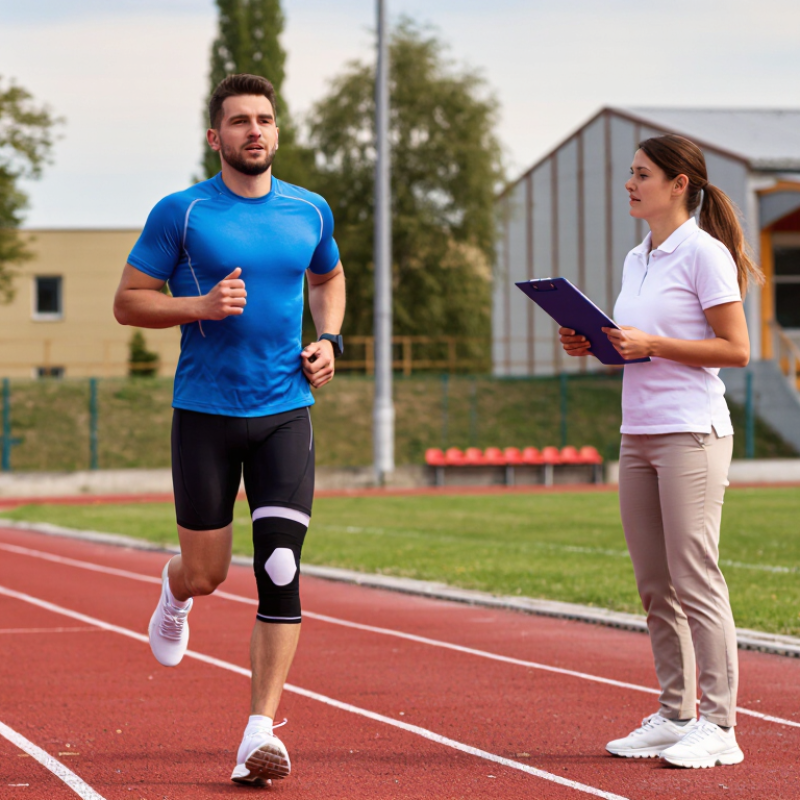
Reinjury happens when a previously injured area is hurt again, sometimes during the same activity. Symptoms may fade before strength, balance, or mobility fully return. That gap can make a quick return to sport or work risky. A knee may feel fine while walking, then wobble during a sudden turn. Pain is information, but its absence does not always mean full recovery.
Common risk factors include returning too soon, skipping parts of rehabilitation, and increasing activity too quickly. Weak muscles, limited joint movement, poor balance, and fatigue can change how the body handles force. A previous injury may also raise risk, especially if the original cause remains. Sleep, stress, and a busy training schedule matter too. Honestly, recovery can feel frustratingly slow.
Reduce avoidable risk by following a gradual, individualized return plan with a qualified health professional. Track how the area responds during activity and over the following day. New swelling, sharp pain, or a limp deserves attention, not a test of toughness. Build back with manageable steps: for example, increase walking time before adding hills or speed. Progress is not always smooth, and a setback may mean adjusting the plan rather than abandoning it.
Before planning a return, identify what the injury actually involves. Mild soreness and a serious tear can look similar at first. Note when pain began, where it sits, and whether swelling or bruising is increasing. Can you walk, grip, or move the joint normally? Do not test it aggressively. Seek prompt medical assessment for severe pain, deformity, numbness, or inability to bear weight. A clinician can assess injuries that are difficult to judge at home.
Readiness is more than feeling better while resting. The area should have comfortable movement and near-normal strength for everyday tasks. Balance and control matter, too. For a runner, that might mean brisk walking and gentle hopping without sharp pain or limping. Increase activity in small steps, then check how the body responds later that day and the next morning. Symptoms that return or worsen are useful feedback, not a challenge to push through.
There is no single timeline that fits every injury. A checklist can help, but it can miss important details. I might feel confident after one good session, yet still lack control when tired. For significant injuries, surgery, or recurring symptoms, ask a qualified health professional to guide testing and return-to-sport decisions. Progress should feel steady, not forced.
A personalized rehabilitation plan should match the injured tissue, surgery history, daily demands, and current capacity—not a generic calendar. Set small milestones: walking without a limp, controlled single-leg squats, then faster changes of direction. Record pain, swelling, sleep, and next-day stiffness after each session. These details help a clinician adjust load before a manageable flare becomes a setback. Progress should feel earned, not rushed.
The numbers deserve context. In a 2016 British Journal of Sports Medicine study of 106 athletes after ACL reconstruction, each month return to demanding sport was delayed, up to nine months, was associated with a 51% lower reinjury rate. A 2020 Journal of Orthopaedic & Sports Physical Therapy cohort found athletes returning before nine months had 6.7 times the rate of a second ACL injury. These findings concern specific athlete groups, not every injury. A clinician may therefore combine strength tests, hop tests, movement quality, and confidence rather than rely on time alone. No single test is perfect. A plan can look neat on paper and still miss what happens on a tired leg, late in practice. That gap deserves honest review.
| Rehabilitation stage | Main goals | Typical plan elements | Progress when… | Reinjury-risk safeguards |
|---|---|---|---|---|
| Assessment and planning | Clarify the injury, current function, activity demands, and individual risk factors. | A qualified clinician reviews symptoms, medical history, movement, strength, range of motion, and relevant imaging or test results. | The diagnosis and a measurable, activity-specific plan have been discussed with the treating clinician. | Do not use a generic timeline as clearance. Seek prompt medical advice for severe pain, marked swelling, deformity, numbness, or inability to bear weight. |
| Symptom management and early movement | Manage symptoms while maintaining safe, appropriate movement. | Follow injury-specific advice; use suitable daily movement and gentle mobility or muscle-activation exercises when cleared. | Symptoms are stable or improving, and prescribed movements can be completed with good control. | Avoid pushing through sharp or worsening pain. Adjust activity if symptoms flare during exercise or remain noticeably worse afterward. |
| Strength and mobility | Restore the movement and strength needed for daily tasks and later training. | Progress resistance, balance, and mobility exercises gradually, with technique and load tailored to the injury and person. | Movement quality and function improve, and the current workload is tolerated without a significant or persistent symptom increase. | Increase one training variable at a time where practical, such as load, repetitions, duration, or frequency; schedule recovery between demanding sessions. |
| Sport- or activity-specific training | Rebuild the speed, coordination, endurance, and decision-making required for the intended activity. | Progress from controlled drills to more complex, faster, or more demanding tasks under clinician or coach guidance. | Relevant tasks can be completed with appropriate control and without concerning symptoms; the clinician-defined criteria are met. | Do not treat a single pain-free session as proof of full readiness. Include repeated efforts and recovery demands that resemble the intended activity. |
| Return to activity | Resume participation safely and build tolerance over time. | Use a staged return: begin with a manageable amount of activity, then increase exposure according to the agreed plan. | Progression is supported by function, symptoms, and any injury-specific tests selected by the treating professional. | Return-to-activity decisions should be individualized. There is no single test or strength-symmetry threshold that applies to every injury and person. |
| Ongoing prevention | Maintain capacity and respond early to changes. | Continue an appropriate strength, balance, mobility, or conditioning routine; review technique, equipment, and training load as relevant. | The routine is sustainable and can be adjusted as activity demands change. | Report recurring pain, swelling, instability, or declining function. Revisit the plan with a clinician rather than repeatedly training through worsening symptoms. |
Important: This is a general planning framework, not a diagnosis or a substitute for medical care. Rehabilitation exercises, progression, and return-to-activity decisions should be personalized to the injury, health history, and guidance of a qualified healthcare professional.
Reducing reinjury risk means rebuilding capacity, not simply waiting a set number of weeks. Begin with comfortable movement, then restore strength, balance, and sport-specific speed. Track next-morning soreness, swelling, and how stairs feel. Small details matter. A joint can feel fine during practice and swell later that evening. Progress should respond to symptoms and clinical assessment, not the calendar alone.
A 2016 systematic review and meta-analysis in the American Journal of Sports Medicine reported that 23% of athletes under 25 who returned to sport after ACL reconstruction sustained a second ACL injury. This figure describes a high-risk group; it does not predict an individual’s outcome. It does show why passing time alone is not enough. Increase one demand at a time, such as duration, speed, or cutting, and check how the body responds over the next day.
Before returning to unrestricted play, discuss strength, movement control, and sport-specific tasks with a qualified clinician. A controlled single-leg landing may reveal hesitation that ordinary walking misses. Return-to-sport guidance, including the 2016 Bern consensus statement, supports a staged process rather than a single clearance moment. Some weeks will feel uneven. That is not automatically failure, but persistent pain, swelling, or declining function deserves reassessment. Progress can be slower than expected, and plans may need revision.
How to Reduce the Risk of Reinjury in 2026?
Monitoring Recovery and Maintaining Injury-Prevention Habits
Recovery is more than waiting for pain to disappear. Track symptoms, sleep, and activity in a simple daily note. Record details such as a stiff ankle on the first stairs or soreness after a longer walk. Small signals matter. Patterns can help you and your healthcare professional adjust activity before a minor problem grows.
Increase training gradually, and watch how your body responds later that day and the next morning. A single good session does not prove you are ready for full intensity. Keep strength, balance, and mobility work in your routine, even after normal activities feel comfortable. Progress is rarely tidy. If pain, swelling, weakness, or reduced movement returns, ease back and seek advice from a qualified clinician.
Make prevention habits easy to repeat: warm up, use suitable equipment, and leave room for recovery between demanding sessions. Set reminders if exercises slip your mind; that happens, especially during busy weeks. Do not treat a checklist as a substitute for judgment. Return-to-activity plans should reflect the injury, your progress, and professional guidance, rather than a fixed date or someone else’s timeline.
Monitoring Recovery and Maintaining Injury-Prevention Habits
In a study of young athletes after ACL reconstruction, returning to knee-strenuous sport before 9 months was associated with a 6.7 times higher rate of a second ACL injury than returning at or after 9 months. This is a relative comparison, not an estimate of an individual’s absolute risk. Use recovery monitoring and a gradual, criteria-based return plan with a qualified clinician.
Source: Beischer et al., Journal of Orthopaedic & Sports Physical Therapy, 2020.
Reinjury is damage to an area that was injured before. Pain may fade before strength, balance, or movement fully return. Feeling fine while walking is not always enough.
Returning too soon, skipping rehabilitation, or increasing activity quickly can raise risk. Weak muscles, limited movement, poor balance, fatigue, stress, and poor sleep may also matter.
Follow a gradual plan shaped around your injury and daily demands. Try increasing walking time before adding hills or speed. Small steps count.
It can set milestones such as walking without a limp, doing controlled single-leg squats, and changing direction faster. A qualified health professional can adjust the plan to your progress.
Track pain, swelling, sleep, and stiffness the next morning. Notice details like a swollen joint after practice or discomfort on stairs. They can help guide adjustments.
In one study of 106 athletes after ACL reconstruction, each month of delayed return, up to nine months, was associated with a 51% lower reinjury rate. This finding applies to that group, not everyone.
No. A clinician may consider strength, hopping, movement control, and confidence. One test cannot capture everything, especially how a tired leg moves late in practice.
New swelling, sharp pain, a limp, or declining function deserves attention. A setback may mean the plan needs adjustment. Progress can be uneven.
Reducing the chance of another injury starts with understanding what contributed to the first one. The severity of the injury, lingering symptoms, movement limitations, and overall fitness can all affect readiness to return to activity. Rather than relying on a fixed timeline, use appropriate professional guidance and consider whether you can move comfortably and perform everyday tasks without worsening symptoms.
A personalized rehabilitation plan can help restore mobility, strength, balance, and confidence. Build back gradually, increasing activity only when your body tolerates the current level, and pause or adjust if pain or swelling returns. Track your progress and maintain useful habits, such as warm-ups, recovery time, and exercises that support stability and control. These steps offer a practical approach to how to reduce risk of re-injury while making a safer, more sustainable return to regular activity.
