Understanding the distinction between muscle strain and sprain is crucial for effective injury management. According to the American Academy of Orthopaedic Surgeons, muscle strains involve the overstretching or tearing of muscle fibers, while sprains pertain to ligament injuries. Each condition has unique symptoms and recovery processes, which can significantly impact an individual's daily activities.
In a recent report by the National Institutes of Health, it was noted that approximately 30% of sports injuries are sprains or strains. With millions affected each year, understanding what is the difference between muscle strain and sprain becomes essential. Symptoms like swelling and pain may overlap, yet their origins differ. Acknowledging this can guide individuals in seeking appropriate treatment.
In many instances, athletes and active individuals may misidentify their injuries. Experience shows that this confusion can delay recovery. Early recognition of the type of injury can lead to better outcomes. Knowing when to consult a healthcare professional can avoid long-term complications and promote a quicker return to activity. Understanding these nuances allows for informed decisions about treatment and rehabilitation.
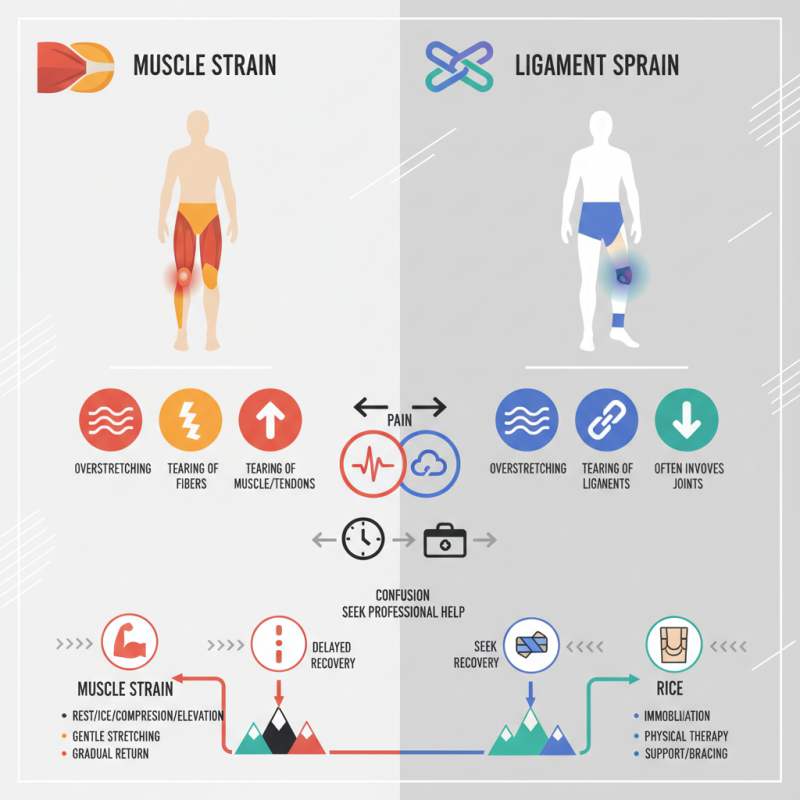
Understanding the anatomy of muscles and ligaments is crucial for differentiating between a strain and a sprain. Muscles are composed of fibers that contract to produce movement. Ligaments, however, are dense bands of connective tissue that stabilize joints by connecting bones. According to data from the American Academy of Orthopaedic Surgeons, over 30% of sports injuries are related to strains and sprains. Knowing the structural differences can aid in early detection and treatment, ultimately leading to better recovery outcomes.
In a muscle strain, the fibers can be overstretched or torn, often from abrupt movements. Indicators include swelling, bruising, and limited range of motion. A sprain occurs when ligaments are stretched or torn, frequently due to falls or twists. Signs such as joint instability and joint pain are common. A study published in the Journal of Athletic Training revealed that 40% of athletes may misidentify these injuries due to a lack of anatomical knowledge. This highlights a gap in education that may lead to improper treatment and prolonged recovery times. Understanding these finer details can help individuals make informed choices about their treatment paths.
This chart showcases the comparison of common symptoms reported by patients with muscle strains and ligament sprains. It illustrates how muscle strains are generally associated with a higher reporting of symptoms compared to ligament sprains.
Muscle strains and sprains are common injuries that can affect anyone, from athletes to weekend warriors. Understanding their common causes and risk factors is essential for prevention. Research indicates that nearly 50% of athletes will experience a muscle strain at some point in their careers. Many of these strains are caused by inadequate warm-up routines and improper techniques during physical activities.
Age is a significant risk factor. Individuals over 40 are more prone to muscle strains. As we age, muscle elasticity decreases, making injuries more likely. Additionally, certain sports put players at risk. Sports involving rapid changes in direction or heavy lifting, such as football or weightlifting, often lead to these types of injuries. Moreover, a lack of proper conditioning increases the likelihood of strains.
Overstretching is another key issue. Many people underestimate the importance of flexibility. Studies show that athletes who engage in regular stretching routines can reduce their injury risk by up to 30%. This highlights how simple practices can prevent serious problems. Educating oneself on proper techniques and being mindful of the body’s signals is crucial in minimizing risks for strains and sprains. Ignoring early signs of discomfort can lead to more severe injuries.
Muscle strains and sprains are common injuries, yet they are often confused. Recognizing the distinguishing signs is crucial for effective treatment. Muscle strains typically result from overstretching or tearing of muscle fibers. Symptoms include immediate pain, swelling, and limited range of motion. According to a 2021 report from the American Orthopaedic Society for Sports Medicine, approximately 50% of athletes experience muscle strains during their activities.
In contrast, sprains affect ligaments, the connective tissue that stabilizes joints. Symptoms of a sprain include swelling, bruising, and joint instability. Research indicates that sprains can take longer to heal compared to strains. A study conducted by the National Athletic Trainers' Association found that 30% of ankle injuries are sprains, highlighting their prevalence in active populations.
Evaluating the nature of the pain can also aid differentiation. Strain pain is typically localized, often worsening with movement of the affected muscle. With sprains, pain can radiate around the joint, making it harder to pinpoint. Both injuries require careful assessment and appropriate rest, but recognizing the differences can lead to better recovery outcomes.
When assessing a muscle strain or sprain, diagnostic imaging plays a crucial role. X-rays are often the first step. These images help rule out fractures. They provide a clear view of bone structures. However, they won't show soft tissue injuries well.
For deeper evaluation, MRI scans and ultrasounds are effective. MRIs offer detailed images of muscles, tendons, and ligaments. They can identify tears and inflammation. Ultrasounds are useful for real-time imaging. They help monitor swelling and blood flow. Both techniques highlight the difference between strains and sprains.
In practice, the choice of imaging depends on the symptoms. A mild strain may only need an X-ray. Severe sprains, on the other hand, often require MRI. Each technique has its pros and cons. Understanding these options is key. Healthcare professionals must tailor the approach to each patient. It's essential to communicate why a specific imaging method is chosen. This engagement builds trust and leads to better outcomes.
Muscle injuries, such as strains and sprains, require proper rehabilitation strategies. A tailored approach aids recovery and minimizes complications. Begin with rest. It’s essential to avoid aggravating the injury initially. Cold therapy can reduce swelling and relieve pain. Applying ice for 15-20 minutes can offer significant relief.
As healing progresses, gentle stretching is crucial. It helps restore flexibility and prevent stiffness. Incorporate strength training gradually to rebuild muscle. Resistance exercises can further enhance recovery. Consistency is vital, as too much strain can lead to setbacks.
Listening to your body is necessary during rehab. Pain is an indicator that you may be pushing too hard. Consulting with a healthcare professional is wise for personalized guidance. They can ensure you adopt the correct exercises and techniques. This way, you not only promote healing but also prevent future injuries.
: Muscles contract to create movement. Ligaments stabilize joints by connecting bones.
Symptoms include immediate pain, swelling, and limited movement. Pain worsens with muscle activity.
Sprains show swelling, bruising, and joint instability. Pain can also spread around the joint.
Misidentifying injuries can lead to improper treatment. This may prolong recovery times unnecessarily.
About 50% of athletes face muscle strains. Additionally, 30% of ankle injuries are sprains.
Rest is crucial. Ice can help with swelling. However, seek professional advice if symptoms persist.
Generally, muscle strains heal faster. Sprains often take longer due to the nature of ligament healing.
A lack of anatomical knowledge contributes to this issue. Education plays a vital role in identifying injuries.
Assess your symptoms carefully. If unsure, consult a healthcare professional for proper evaluation.
Yes, it's possible for both a strain and a sprain to happen in different areas or together.
Understanding the difference between a muscle strain and a sprain is crucial for effective injury management. A strain typically affects muscle fibers, while a sprain involves the ligaments that connect bones at a joint. Both injuries can arise from similar activities, including sports and physical exertion, but they differ in terms of symptoms and treatment approaches. Common symptoms of muscle strains may include localized pain and stiffness, whereas sprains often manifest as swelling and joint instability.
To accurately diagnose these conditions, healthcare providers may utilize various imaging techniques, such as MRI or ultrasound. Treatment strategies vary, focusing on rehabilitation to restore strength and flexibility while ensuring proper recovery. Knowing what is the difference between muscle strain and sprain is essential for individuals to seek appropriate care and engage in effective rehabilitation for a swift return to activity.
