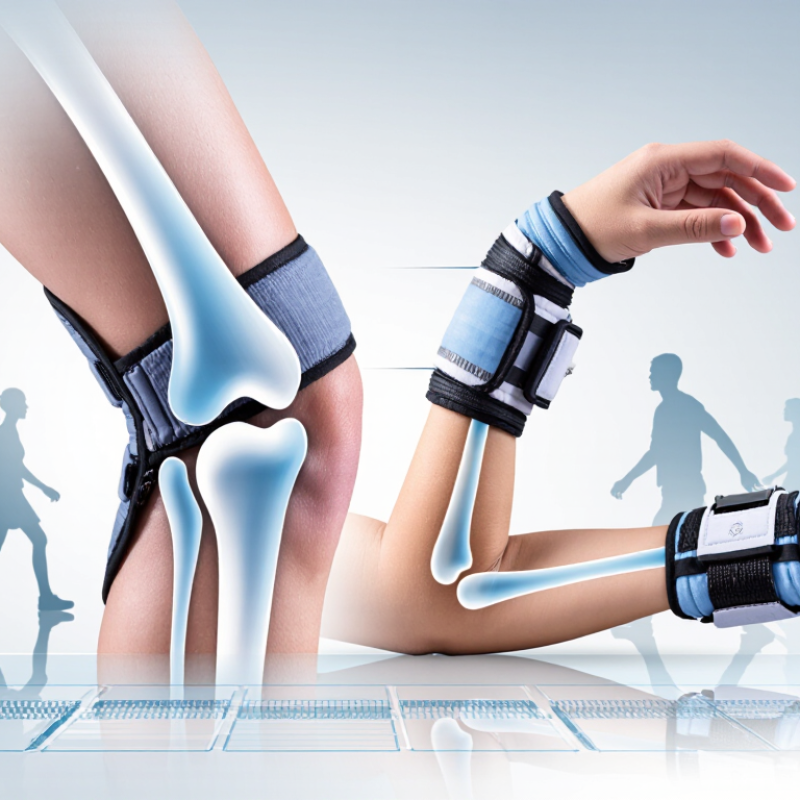
China Top Joint Supports: How to Stabilize Joints Freely? begins with a practical question. Can support protect a joint without making it feel locked? The answer depends on design, fit, and the user’s movement needs.
Joint stability is not the same as stiffness. A well-designed support may guide motion, reduce unwanted strain, and preserve comfortable range. It should move with the body during walking, lifting, or changing direction. Picture a knee sleeve that stays secure as the leg bends, rather than slipping behind the joint. Small details matter. Breathable fabric, flexible panels, adjustable compression, and accurate sizing can influence comfort and control.
Movement remains essential.
Physical therapist and movement specialist Gray Cook says, “Movement is a window into the nervous system.” His point supports a careful approach: movement quality can reveal weakness, compensation, fear, or poor coordination. Therefore, how to stabilize joints without restricting movement should not mean adding maximum compression. It means matching support to the activity and the individual.
A brace may help during recovery or demanding tasks, but it cannot replace professional assessment. Pain, swelling, repeated instability, or numbness requires medical guidance. Product claims should also be tested against practical evidence, not attractive packaging. I have to acknowledge one limitation here: no support works equally well for every body, sport, or injury.
The strongest options balance protection with freedom. They provide confidence without creating dependence. This outline will examine support materials, joint-specific designs, fitting methods, movement preservation, and responsible use.
China’s joint-support market is expanding as knee osteoarthritis becomes a visible public-health concern. A widely cited Chinese epidemiological estimate places knee osteoarthritis prevalence at about 8.1% among adults. The figure varies by age, sex, and diagnostic method. That variation deserves attention. It is not a small technical detail.
The Global Burden of Disease Study 2019 estimated that 528 million people worldwide lived with osteoarthritis in 2019. The World Health Organization also reports that about 73% of affected people are over 55. These figures help explain demand for knee braces, compression supports, and mobility aids in China.
However, supports should improve comfort or stability, not promise cartilage repair. Clinical decisions still require assessment of pain, alignment, strength, and walking ability.
A useful support should fit firmly without causing numbness, skin irritation, or restricted circulation. Someone climbing stairs may need different support from someone standing at work all day. Exercise, weight management, and professional rehabilitation remain important. A brace alone is rarely enough. Evidence is still uneven for some product types, especially long-term outcomes. Consumers should check study quality, adjustment guidance, and medical supervision instead of trusting dramatic claims. Even a well-designed support can fail when the fit is wrong.
Joint stability is not created by a brace alone. It comes from cooperation among ligaments, muscles, and proprioception. Ligaments limit excessive motion and guide the joint under load. They are passive tissues, so they cannot react quickly when balance changes.
Muscles provide active control. The quadriceps, hamstrings, and hip muscles can steady the knee during a step or landing. Around the shoulder, the rotator cuff helps keep the joint centered. Strength matters, but timing matters too. A strong muscle that reacts late may still allow an awkward movement. Slow step-downs, controlled reaches, and gentle resistance exercises can improve this control. Keep the motion smooth. Pain is not a useful training target.
Proprioception tells the nervous system where the joint is, even without looking. It depends on signals from ligaments, tendons, muscles, and skin. Standing on one leg near a stable surface can challenge this system safely. Progress gradually by adding reach, a soft surface, or a small change in direction. A support may reduce unwanted movement during recovery, but excessive dependence can limit natural feedback. That point deserves more thought. People sometimes focus on equipment while neglecting basic movement quality. Persistent swelling or giving-way needs assessment by a qualified clinician, especially after trauma.
A practical overview of the biological systems that help joints remain aligned, controlled, and responsive during movement.
| Joint or System | Key Passive Stabilizers | Key Active Stabilizers | Proprioceptive Contribution | Support and Movement Considerations |
|---|---|---|---|---|
| Shoulder | Joint capsule, glenoid labrum, and ligaments including the superior, middle, and inferior glenohumeral ligaments. | Rotator cuff, deltoid, and scapular stabilizers such as the serratus anterior and trapezius. | Sensory receptors in the capsule, labrum, muscles, and tendons help detect arm position and rapid changes in movement. | Shoulder supports may provide compression and movement awareness, but excessive restriction can interfere with normal range of motion. |
| Elbow | Joint capsule, ulnar collateral ligament, radial collateral ligament, and the shape of the ulnohumeral joint. | Biceps, triceps, forearm flexors, and forearm extensors. | The nervous system uses feedback from muscles and joint tissues to regulate elbow angle and load during gripping or throwing. | A brace may be designed to limit painful or excessive movement while allowing controlled flexion and extension. |
| Wrist | Radiocarpal ligaments, the triangular fibrocartilage complex, joint capsule, and intercarpal ligaments. | Wrist flexors, wrist extensors, and muscles that control forearm rotation and grip. | Feedback from the wrist and hand helps coordinate grip force, wrist alignment, and fine motor control. | A support can help maintain a neutral wrist position; fit should preserve circulation, finger movement, and skin comfort. |
| Hip | Deep acetabulum, acetabular labrum, joint capsule, and iliofemoral, pubofemoral, and ischiofemoral ligaments. | Gluteal muscles, hip rotators, iliopsoas, adductors, and abdominal muscles. | Proprioceptive input supports pelvic control, balance, and accurate positioning of the thigh during walking and landing. | External supports are generally used to improve comfort or movement control; strengthening and movement training remain important. |
| Knee | Anterior and posterior cruciate ligaments, medial and lateral collateral ligaments, menisci, and the joint capsule. | Quadriceps, hamstrings, gastrocnemius, popliteus, and hip muscles that control lower-limb alignment. | Receptors in the ligaments, capsule, muscles, and tendons help coordinate knee position and protective muscle responses. | A knee support may provide compression or limit selected movements, but it should not replace professional assessment after significant injury. |
| Ankle | Lateral ankle ligaments, deltoid ligament, syndesmotic ligaments, joint capsule, and the shape of the ankle mortise. | Peroneal muscles, tibialis anterior, tibialis posterior, calf muscles, and intrinsic foot muscles. | Fast sensory feedback helps the body respond to uneven surfaces, sudden inversion, and changes in loading. | An ankle brace can limit excessive inversion or provide compression while balance exercises help restore neuromuscular control. |
| Spine and Trunk | Intervertebral discs, facet joints, spinal ligaments, vertebral alignment, and connective tissues. | Deep spinal muscles, multifidus, erector spinae, abdominal muscles, diaphragm, and pelvic-floor muscles. | Sensory information from spinal muscles and joints contributes to posture, trunk orientation, and coordinated movement. | External supports may offer temporary comfort or posture cues; prolonged dependence should be guided by a qualified healthcare professional. |
| Stability Component | Primary Function | Typical Contribution | Training or Support Implication |
|---|---|---|---|
| Ligaments and Joint Capsule | Passively resist excessive translation and rotation while guiding joint movement. | Most important near specific end ranges and during unexpected forces. | External support may reduce selected stresses, but it cannot fully substitute for intact tissue or rehabilitation. |
| Muscles and Tendons | Actively control joint position, absorb force, and adapt stiffness to the task. | Continuously adjust stability during walking, lifting, reaching, and sport. | Progressive strengthening, coordination, and task-specific exercises can improve active control. |
| Proprioception | Provides information about joint position, movement, speed, and force. | Supports balance, automatic muscle responses, and movement accuracy. | Balance drills, controlled movement, and varied surfaces can challenge sensory-motor control when appropriate. |
| External Joint Support | May provide compression, warmth, movement limits, or tactile feedback. | Can assist comfort and confidence during selected activities, depending on the joint and condition. | The correct size, movement allowance, and duration of use are important; pain, swelling, numbness, or color changes require reassessment. |
Joint support should match the movement you need, not simply feel tight. Flexible braces use elastic fabric and light compression. They suit mild discomfort, daily walking, and early exercise routines.
Hinged braces add side supports and controlled movement. They can help protect knees or elbows during changing directions. Rigid braces limit motion more strongly. They may support recovery after injury, but they can also reduce natural movement.
A reliable fitting process starts with the joint’s condition, activity level, and measured circumference. Check the size guide carefully. It is not always perfect. A brace that slips can rub the skin, while excessive pressure may cause numbness or swelling. In practice, users often choose rigid support too early because it feels safer. That choice can weaken confidence in normal movement. A qualified clinician should guide brace selection after significant pain, instability, or surgery.
Tips: Test the brace for ten minutes before longer use. Walk slowly and check for slipping, pinching, or color changes. Keep hinges clean and inspect stitching regularly. Stop using it if numbness develops. Do not sleep in a restrictive brace unless advised. Flexible support often works for routine tasks, while hinged or rigid designs need clearer medical reasons. Fit matters more than appearance. Even a well-made brace cannot correct every joint problem.
A well-fitted joint support should stabilize movement without creating pressure points. Comfort is useful, but it does not prove the fit is correct. Measure the joint circumference with a soft tape before choosing a size. Keep the tape level, and avoid pulling it tightly. Measure after normal activity if swelling changes during the day.
Place the support over clean, dry skin. It should feel firm, not restrictive. You should move your fingers without numbness, tingling, or unusual coldness. Check the skin after 15 to 20 minutes. Red marks that fade quickly may be harmless, but deep lines, discoloration, or burning deserve attention. Remove the support if discomfort increases. Skin response matters.
A practical fitting check is simple. Walk, bend, or lift lightly, depending on the joint involved. The support should stay in position without sliding or bunching. Excess compression can limit circulation and alter natural movement. Too little compression may provide almost no control. This balance is not always obvious. I have found that users often choose tighter support, expecting faster relief, yet tighter is not automatically better. Recheck the circumference when swelling changes. If pain, weakness, persistent numbness, or skin damage appears, stop using it and seek advice from a qualified healthcare professional. Their assessment can identify whether the support, size, or underlying condition needs attention.
China Top Joint Supports: How to Stabilize Joints Freely?
A joint support should steady movement, not lock the body into fear. In practice, bracing works best with progressive exercise and professional guidance. Evidence varies by joint, diagnosis, and injury stage. A soft knee sleeve may improve confidence during walking. A rigid brace may restrict harmful motion after injury. It cannot rebuild weakened muscles. Fit matters greatly.
Safety begins with materials touching the skin. ISO 10993 evaluates possible biological responses, such as irritation or sensitization. It does not prove that a brace stabilizes joints effectively. Reliable suppliers should provide test reports, material declarations, and manufacturing traceability. Inspect seams, edges, fasteners, and lining before use. Small details matter. Stop wearing the support if redness, numbness, swelling, or unusual heat develops.
A practical plan may combine short isometric exercises with gentle range-of-motion work. Increase loading slowly, while a physiotherapist checks alignment and technique. Pain is information, not a challenge. Reassess the brace after several sessions, especially if movement feels restricted. Evidence is useful, but it is not perfect for every user. I would not promise joint stability from a product page alone. My own assumption can be wrong without clinical assessment and follow-up.
One widely cited estimate places prevalence near 8.1% among adults. The figure varies by age, sex, and diagnostic methods.
It may improve comfort, stability, or confidence during walking. It cannot promise cartilage repair or cure the underlying condition.
A flexible brace may provide light compression and gentle support. It can suit routine activities and early exercise. It may not be enough for instability.
Hinged designs can guide movement during turning, climbing stairs, or changing direction. A clinician should assess persistent pain or instability first.
Rigid braces limit movement more strongly. They may assist recovery after significant injury or surgery. Too much restriction can reduce natural movement.
Measure the joint circumference and compare it with the size guide. Test the brace for ten minutes. Check for slipping, pinching, numbness, or skin color changes.
Excessive pressure may cause numbness, swelling, or restricted circulation. A loose brace can rub the skin. Fit matters more than appearance.
No. Exercise, weight management, and professional rehabilitation remain important. A brace alone is rarely enough, though that is easy to forget.
Usually, avoid sleeping in one unless a qualified clinician advises it. Remove it if numbness, unusual swelling, or skin irritation appears.
Check study quality, adjustment instructions, and long-term evidence. Some product evidence remains uneven. Dramatic promises deserve careful doubt.
Joint-support products are increasingly relevant as knee osteoarthritis affects approximately 8.1% of adults. Effective stabilization depends on more than external support: ligaments provide passive restraint, muscles control movement, and proprioception helps the body sense joint position. The goal is to maintain confidence and alignment while preserving natural mobility. Understanding how to stabilize joints without restricting movement can help users choose support that matches their activity and condition.
Flexible braces may offer light compression and movement freedom, while hinged designs provide greater control for unstable joints. Rigid supports are intended for situations requiring stronger limitation of motion and should be selected carefully. A proper fit requires measuring joint circumference, avoiding excessive tightness, and checking the skin for numbness, discoloration, or irritation. Bracing works best alongside appropriate exercise and professional guidance, and materials should be evaluated for skin-contact safety, including compliance with ISO 10993 standards.
