why do injuries happen during training is a question with no single answer. Often, several small pressures build: a sudden increase in workload, too little recovery, repeated movements, or technique that slips as fatigue sets in. A runner may feel a sharp pull on the final hill; a lifter may notice their back rounding after another heavy set. These moments matter, but so do sleep, previous injuries, equipment, and the training surface. Pain is not always proof of damage, either, and pushing through it can blur an important warning.
The NCAA Injury Surveillance Program offers a useful measure of risk. Its 2009–10 to 2014–15 analysis recorded about 7.92 injuries per 1,000 athlete-exposures in competition, compared with 2.02 in practice. An athlete-exposure means one athlete taking part in one practice or competition. The difference is a reminder that intensity and conditions can change injury risk, though rates vary by sport. Sports-injury researcher Dr. Roald Bahr has written, “Injury prevention in sports requires a thorough understanding of the injury mechanisms involved.” That is a useful starting point, not a complete answer. Coaches and athletes still need to track workload, notice recurring soreness, and adjust sessions when recovery falls behind. Even experienced people miss early signals sometimes. That deserves honest attention. A sensible training plan reduces avoidable risk, but it cannot promise injury-free sessions; understanding the causes helps people respond sooner and train more safely.
Defining Training Injuries: Acute Trauma and Overuse
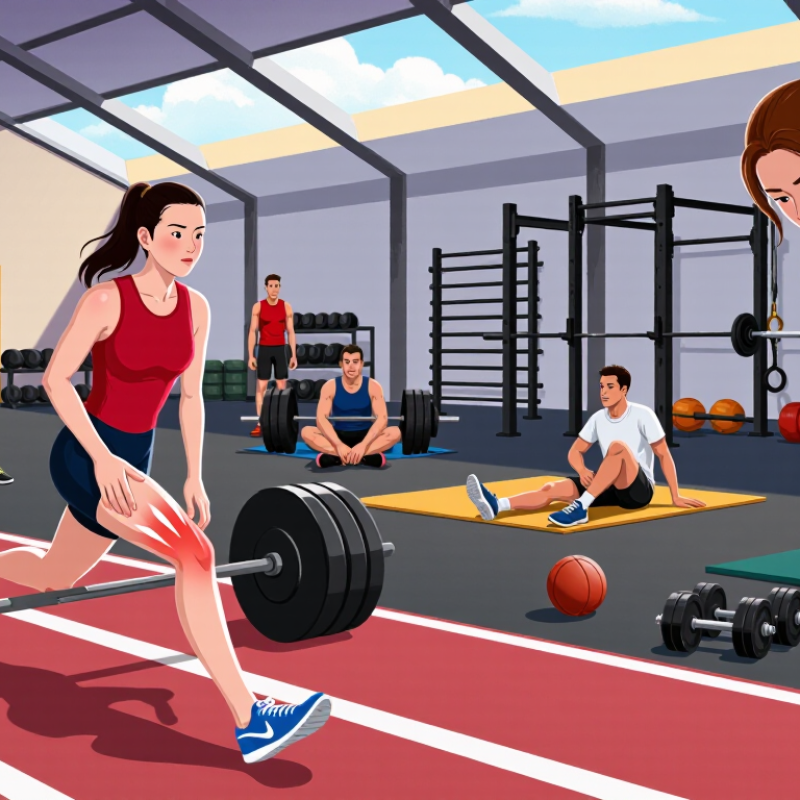
Training injuries generally fall into two categories: acute trauma and overuse. Acute injuries happen suddenly, often after a fall, collision, awkward landing, or slipped grip. A sharp ankle twist or a shoulder pulled while catching a heavy bar can stop a session immediately. The National Safety Council’s Injury Facts, drawing on 2022 U.S. emergency-department data, recorded 445,642 injuries involving exercise equipment. That figure covers equipment-related injuries, not training injuries alone, so it needs careful interpretation.
Overuse injuries develop more quietly. Repeated loading can irritate tendons, bones, or joints when recovery falls behind demand. A runner may notice heel soreness that returns each morning; a lifter may feel persistent elbow pain during familiar movements. The American Academy of Pediatrics reports that overuse injuries account for about half of injuries in young athletes. Slow onset can make them easy to dismiss. It can also make the exact cause hard to identify.
The distinction is useful, but not always neat. A tired muscle may change movement, then make an acute strain more likely; a minor injury may also linger under repeated training. Track when pain begins, what movement triggers it, and whether it settles with rest. Those details help a qualified clinician assess the problem. Athletes do not always log them. That is a fixable blind spot.
How Sudden Increases in Training Load Can Outpace Tissue Adaptation
Why Do Injuries Happen During Training?
How Sudden Increases in Training Load Can Outpace Tissue Adaptation
Training can feel manageable until the workload changes faster than the body can adjust. A runner adds several miles, hills, and speed sessions in one week. Each change may seem small on its own. Together, they can sharply increase stress on muscles, tendons, and bones. These tissues adapt, but adaptation takes time and varies with training history, sleep, nutrition, and health.
The warning signs are not always dramatic. A tendon may feel stiff during the first steps each morning, or a familiar route may suddenly leave one calf unusually sore. Mild discomfort does not always mean an injury is developing, but pain that worsens, changes movement, or persists deserves attention. Rest and gradual adjustments can help; a qualified health professional can assess symptoms that concern you.
Training plans rarely capture everything. Work stress, poor sleep, or a missed recovery day can make a usual session feel different. It is tempting to treat every scheduled workout as proof of discipline. I’d question that instinct: consistency matters, but so does noticing when the body is not keeping pace. Increase distance, intensity, or frequency cautiously rather than changing all three at once, and allow easier days to remain genuinely easy.
How Technique, Fatigue, and Recovery Influence Injury Risk
Why Do Injuries Happen During Training?
How Technique, Fatigue, and Recovery Influence Injury Risk
Training injuries rarely have a single cause. Technique can change when a squat gets rushed, a landing turns stiff, or a runner’s stride shortens under strain. One awkward repetition does not always mean an injury is coming, but repeated poor control can place extra stress on the same tissues. Reduce the load and check your movement when form repeatedly slips. Small changes matter. A mirror or a short video may reveal a knee drifting inward, though neither can diagnose an injury.
Fatigue also changes how well the body handles familiar work. Near the end of a hard session, balance and coordination may fade before motivation does. That mismatch can make a usual weight or pace less manageable. Recovery matters, too: inadequate sleep, closely spaced demanding sessions, and a sudden jump in training volume can leave less time to adapt. There is no universal recovery schedule. Keep a simple log of training, sleep, soreness, and performance, then adjust when several signs worsen together.
I used to treat soreness as proof that a session had worked; that was too simplistic. Persistent pain, swelling, or reduced function deserves assessment by a qualified health professional.
CDC Data: 8.6 Million U.S. Sports and Recreation Injuries Annually (2011–14)
CDC estimates that U.S. emergency departments treated an average of 8.6 million sports- and recreation-related injuries each year from 2011 through 2014. The estimate comes from the National Electronic Injury Surveillance System, which samples hospital emergency departments. It is a striking figure, but it does not mean 8.6 million people were injured during formal training. The category includes many sports and recreational activities, from field play to cycling.
The denominator matters. This is an estimate of emergency-department visits, not every sprain, sore tendon, or missed workout. People who manage an injury at home may not appear in the data. Nor can these figures show whether fatigue, sudden increases in workload, poor technique, or an accidental collision caused a particular injury. A runner’s damp shirt, a rushed final set, or a sharp turn on a crowded court may tell a coach something useful, but the national estimate cannot explain that moment.
For training decisions, the CDC data is a scale warning, not a personal risk score. Track changes in duration and intensity, and note pain that persists or alters movement. Small details matter. Yet injury logs are imperfect, too: athletes may forget sessions or underreport discomfort. The numbers deserve attention, and a little humility.
Why Do Injuries Happen During Training? - CDC Data: 8.6 Million U.S. Sports and Recreation Injuries Annually (2011–14)
| Data dimension |
Finding |
How to interpret it |
| Study period |
2011–2014 |
The estimate summarizes four years of U.S. emergency-department data. |
| Average annual injury episodes |
8.6 million |
An estimated number of sports- and recreation-related injury episodes treated in U.S. emergency departments each year—not necessarily 8.6 million different people. |
| Annual population rate |
34.1 per 1,000 people |
A population-based rate that puts the annual estimate in context; it is not an individual’s probability of injury during a particular training session. |
| What the total measures |
Emergency-department-treated sports and recreation injuries |
It does not represent every injury: cases treated elsewhere or not receiving medical care are outside this measure. |
| What the data can say about “why” |
The overall count describes the burden, not a single cause. |
The total alone cannot establish whether injuries resulted from training load, technique, equipment, contact, or other circumstances. |
Source: CDC estimates of nonfatal sports- and recreation-related injuries treated in U.S. emergency departments, 2011–2014. Figures are annual estimates.
How Equipment and Training Environments Contribute to Preventable Injuries
Training injuries are often blamed on effort, but the equipment and space can quietly raise the risk. A loose bench bolt, frayed cable, or cracked handle may change how a movement feels. Worn shoe tread can slide on a smooth floor, especially during quick direction changes. Small things matter.
The training area deserves the same attention as the workout plan. Damp patches, curled mat edges, and bags left near walking routes can cause trips or awkward landings. Poor lighting makes it harder to notice obstacles or check foot placement. Crowded stations can also pressure people to rush between exercises. I used to think a quick glance was enough; it is easy to miss a hazard when the room is busy.
Before training, check that benches and racks feel stable, clips are secure, and walking areas are clear. Match the equipment to the exercise and your experience, rather than forcing a setup that feels awkward. Adjust loads gradually, and stop if equipment shifts or pain changes your movement. A checklist helps, though it cannot catch everything. Persistent pain or recurring equipment problems call for advice from a qualified professional.
Why Do Injuries Happen During Training?
Heat is one environmental hazard that can make training unsafe. The chart shows the starting heat-index threshold for each National Weather Service risk band.
What this means: As heat and humidity rise, strenuous training can increase heat-illness risk. Heavy or poorly ventilated protective equipment may also make it harder for the body to lose heat; inadequate maintenance or poor fit can create additional hazards. Adjust intensity, provide rest and water, and check equipment and conditions before training.
Heat-index bands are environmental guidance, not injury-rate data. Source: U.S. National Weather Service heat-index guidance.
Conclusion
Training injuries generally fall into two categories: acute trauma, such as a sudden sprain or collision, and overuse injuries that develop gradually through repeated stress. To understand why do injuries happen during training, it helps to consider how the body responds to workload. When intensity, duration, or frequency rises faster than tissues can adapt, small amounts of strain may accumulate and eventually cause pain or injury.
Technique, fatigue, and recovery also affect risk. Poor movement patterns can place excess stress on joints and muscles, while tiredness may reduce coordination and control. Inadequate rest can limit the body’s ability to repair and adapt. The CDC reported about 8.6 million U.S. sports and recreation injuries annually from 2011 to 2014, illustrating how common these problems can be. Unsuitable or poorly maintained equipment, along with crowded, uneven, or otherwise unsafe training environments, may add preventable hazards. Gradual progression, attentive coaching, appropriate recovery, and safer surroundings can help reduce risk.

 Morfit Tape